A review on behalf of Wheels for Wellbeing.

Every time I pick this book up I linger over the cover, looking at the variety of cycles and the people riding them. It’s rare to see a publication on cycling give equal billing to handcycles and trikes, and possibly rarer still to show the people riding them on an equal footing with other cyclists, making this a unique and lovely example of how to represent people in general and disabled people in particular.
Billed as an ‘Introduction to Amputee Cycling’, Stumps & Cranks is comprehensive in its scope covering just about every aspect of cycling from scratch. Beginning with why an amputee should cycle at all, through all the various types of cycles, adaptions and prosthetics, and finishing with the paralympics, cyclocross and some of the challenges that stretch the more adventurous amputees, including the daily exploits of Wheels for Wellbeing’s very own Jim Bush in Croydon. Just cycling around South London can be challenging at times and I like the kind of variety covered here in people’s personal goals and achievements. An arm amputee being able to cycle to the market in Vietnam and carry 50 kilos of vegetables is a challenge to begin with, and the sense of independence and self-worth in getting the shopping home is just as rewarding as riding across a continent. Not that there’s anything wrong with endurance rides – a touchstone throughout the book is how a cycling goal can serve as a useful proxy for mental and physical recovery whatever the route or destination.
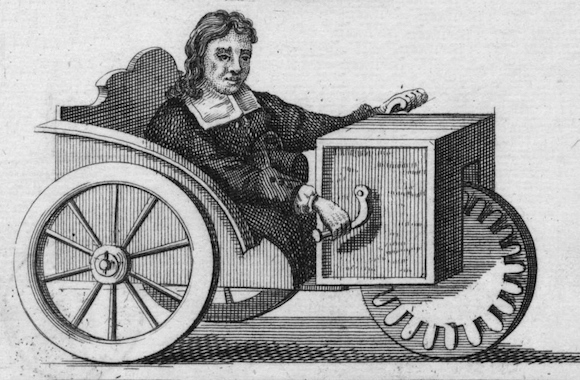
These personal experiences of amputees are a major feature, the author having cast her net far and wide to include people from all over the world with a variety of amputations. I particularly enjoyed the contributions from places I’ve never cycled – who knew there was a Disabled Cycle Messenger Service in Afghanistan? And although I’m no beginner, as a cyclist or an amputee, I discovered things that were new to me like the ‘bum brake’ – slide bottom backwards to stop – and GlideWear patches for skin protection. Along with suggestions of further reading and things to try, each chapter comes with a short “Did you know?” section. One of the things I didn’t know is that a disabled German clockmaker invented what we would recognise today as a handcycle all the way back in 1655! If he invented a time machine too expect to see him gatecrashing this year’s “200 Years of the Bicycle” celebrations.
I was tempted to skip the chapter on nutrition – no mention of cake – but I’m glad I didn’t because I would have missed the story of a Swiss farmer who lost both arms to a baling machine and now rides an adapted recumbent trike. There wasn’t enough detail about the adaptions enabling him to steer and brake to satisfy my curiosity, however, because a web address is listed for many of the contributors it’s possible to get in touch and ask questions directly.
The list of contributors concludes with a request for more amputee cyclists to get in touch through the website, suggesting this is still a work in progress. I spotted a couple of things that slipped through the net if there should be a future edition – the swinging crank adaption and an amputee who cycles following a hemipelvectomy. Also, I couldn’t help noticing the use of ’bicycle’ to mean any type of cycle; it’s quite a common usage, particularly in International English and although within these pages it’s clear that things other than bicycles do exist, I would suggest the more inclusive term ‘cycle’ is preferable.
Possibly because it is so comprehensive, with sections on how to fix bikes and how to read maps as well as how to eat, I came away feeling that the book hadn’t quite reached its destination. Something was missing, something that eventually becomes part of cycling life for many who take it up – how to make cycling better. Riding in heavy traffic is covered in the final pages; a fact of cycling life that most people find stressful and unpleasant if not frightening and life-threatening. For many disabled cyclists, and some amputees, getting off and walking isn’t an option when things get too difficult or barriers make it impossible to continue, and that shouldn’t be a part of the challenge. For those situations changing the environment is the only option, so I think pointing people towards campaign organisations working to make cycling better, and in particular working to make cycling as inclusive as it is on the cover, would put the cherry on the cake.
Nevertheless, this plugs a large gap in contemporary cycling literature and I imagine it’s been quite a journey for the author – to go from non-cycling amputee to curator and writer of an authoritative book on the subject in the space of a couple of years is remarkable in itself. I hope the cycling is going as well. It also raises questions about gaps that may still exist. There’s an overlap between amputees and other types of disability – the same technical solution can work for similar capabilities – but as far as I know, what works for other types of disability and the experiences of those disabled people has yet to be gathered, recorded and made accessible in a similar way.
Verdict: A great addition to the inclusive cycling book shelf and if the cover art isn’t already available as a print it should be!


 Can't Stand Up For Falling Down